What is a graduation cap decorative display font and why does it matter for diplomas and announcements?
A graduation cap decorative display font is a stylized typeface designed to evoke academic tradition think mortarboard silhouettes, subtle laurel motifs, or inked diploma textures. It’s not meant for body text. It’s used where impact matters: on invitation headers, certificate banners, or social media graphics celebrating commencement.
When should you choose this kind of font?
Use it only for short, high-visibility phrases: “Class of 2024”, “Congratulations Graduate”, or “B.A. in Environmental Science”. It works best when paired with clean sans-serif or serif fonts for supporting text. Avoid it in long paragraphs, email signatures, or printed programs where legibility suffers.
How do your design goals affect the choice?
If your project leans vintage, try the vintage diploma decorative display font, which includes engraved lines and parchment-style weight shifts. For formal ceremonies, the gold foil graduation decorative display font adds metallic sheen without overloading print files. For digital use like Instagram story overlays the graduation-cap decorative display font version often includes scalable vector outlines and optional cap glyphs as standalone icons.
Common technical mistakes and how to fix them
Too many designers embed the font directly into PDFs without outlining text. That causes rendering issues on shared devices. Always outline paths before final export. Another error: stretching the font horizontally to fit layout space. This distorts the cap motif and weakens visual cohesion. Instead, adjust tracking or switch to a condensed variant if available.
Can you adjust it yourself at home?
Yes if your software supports OpenType features. Some graduation cap decorative display fonts include alternate glyphs (e.g., a cap-only icon, or a diploma scroll ligature). In Illustrator or Affinity Designer, open the Glyphs panel and swap standard letters for contextual variants. Avoid adding drop shadows or gradients unless the original font was designed for them; most academic display fonts rely on line weight and spacing not effects for clarity.
Quick checklist before finalizing
- Is the font used only for headlines or short celebratory phrases?
- Does the cap motif remain legible at your intended size (minimum 36pt for print, 48px for web)?
- Are supporting fonts neutral enough to avoid competing with the decorative style?
- Have you outlined text or embedded the font properly for sharing or printing?
- Does the color contrast meet accessibility standards (at least 4.5:1 against background)?
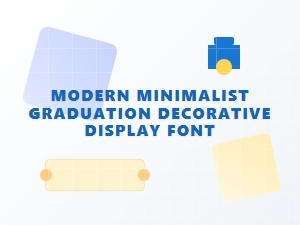 Modern Minimalist Graduation Display Font
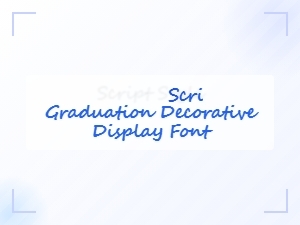 Script Style Graduation Display Font
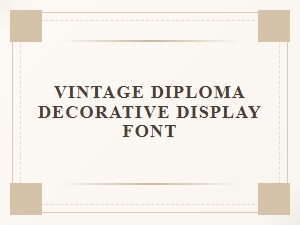 Vintage Diploma Decorative Display Font
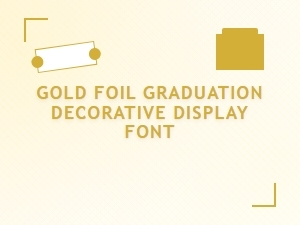 Gold Foil Graduation Display Font
 Elegant Serif Fonts for Graduation Invitations
 Elegant Serif Fonts for Senior Commencement Stationery